
Capacity Without Collapse
Designing the structure required to hold expansion without breakdown.
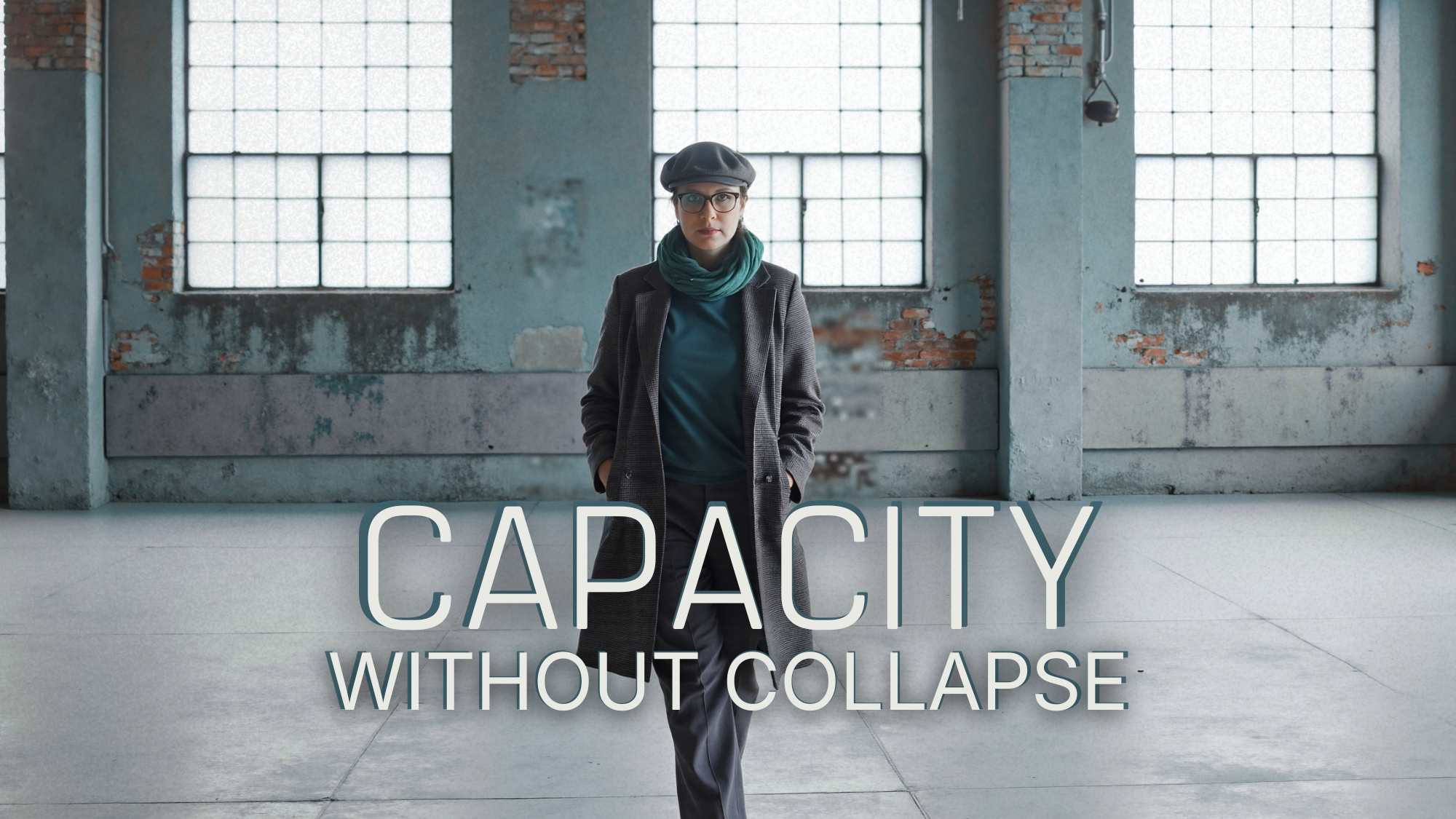
What if the problem isn’t your capacity to lead… but the structure you’re leading inside of?
Most business don’t collapse because they lack resilience, discipline, or ambition. They collapse because their impact outgrows the systems meant to hold it.
Visibility increases. Money moves faster. Responsibility multiplies. Demand intensifies. And suddenly, the business is asking the nervous system, the calendar, and the identity to carry a load they were never designed for.
Capacity Without Collapse exists to interrupt this pattern, before “just push through” becomes the strategy, before endurance replaces design, and before expansion turns into quiet self-erosion instead of sustainable power.
What impact is already exceeding the structure designed to hold it?
This Lab is not about motivation or recovery.
It is about structural clarity.
What This Visioneering Lab Addresses
This Visioneering Lab identifies and corrects the structural conditions that cause collapse during expansion, including:
Responsibility without authority, carrying weight without having designed the container
Growth that increases strain instead of freedom, more success, less capacity
Visibility and revenue without containment, exposure and income with no system to hold them
Founders acting as the primary load-bearing system, the business runs through you instead of being held by structure
Regulation used to compensate for missing infrastructure, self-regulation replacing design, boundaries, and systems
This Lab does not ask you to handle more.
It asks you to design what can be held.
What Happens Inside the Lab
Capacity Without Collapse is a Visioneering Lab designed to restore authority, containment, and structural clarity during expansion.
Inside the Lab, you are not given tactics to manage more load. You are guided to see, name, and design the conditions that make expansion sustainable.
Foundational Orientation
This phase establishes a shared structural lens for understanding collapse vs. capacity.
Foundational Orientation establishes a non-negotiable point of view: expansion must be structurally held, not personally absorbed. This phase recalibrates how growth, pressure, and capacity are interpreted, before any design work begins.
“This is not mindset calibration. It is context realignment, seeing the system as it actually operates." — Leila K.
You will examine:
Why expansion often increases pressure instead of freedom
How visibility, revenue, and responsibility create load when not structurally held
Where ambition diverges from actual load-bearing reality
Structural Diagnosis
This phase isolates where and how capacity is failing inside the system, before collapse becomes personal.
Structural Diagnosis provides a clear, non-emotional assessment of what is being carried, what is missing, and where load is being absorbed by the founder instead of the structure.
“This is not self-correction. It is load tracing, identifying exactly where collapse is being absorbed, and by whom." — Leila K.
You will examine:
Common capacity failure patterns that emerge during expansion
The distinction between personal regulation and missing infrastructure
How self-leadership is often used to compensate for structural gaps
Codified Capacity Frameworks
This phase introduces formal models for understanding capacity as a system, not a personal attribute.
Codified Capacity Frameworks translate expansion into observable, structural components, making strain, overload, and breakdown legible before they become personal or emotional.
“TThis replaces endurance with early structural intelligence—the ability to see and correct strain before collapse is required." — Leila K.
You will examine:
Capacity as a designed system, rather than an individual trait or skill
Frameworks that map where expansion predictably breaks down
Structural indicators that signal overload before burnout appears
Architectural Models (Not Tactics)
This phase introduces structural models that show how capacity is intentionally designed and distributed, without relying on the founder as the primary load-bearing element.
Architectural Models replace reactive effort with designed containment, offering clear alternatives to holding expansion through personal endurance.
“No hacks. No productivity tricks. Only architecture that holds weight.." — Leila K.
You will examine:
High-level models for how capacity is built, allocated, and supported
Structural designs that remove the founder from being the primary load-bearing system
Proven patterns of containment that allow expansion without strain
What This Lab Is Not
This Lab is not:
A coaching container
A Q&A or advice-based space
Emotional processing or regulation work
Troubleshooting execution or tactics
A place to outsource responsibility
If you are looking for:
Reassurance
Step-by-step fixes
Someone to “just help”
This Visioneering Lab is not the correct environment.
Who This Lab Is For
This Lab is designed for you if:
Growth or visibility has started to feel heavier, not freer
You are carrying more responsibility than the system supports
Your business “works,” but at a personal cost
You know something structural must change before expanding further
You are ready to make decisions, not gather more information
Who This Lab Is Not For
This Lab is not for:
Early-stage exploration without commitment
People looking for ongoing support or hand-holding
Execution-first problem solving
Those unwilling to hold authorship over decisions
How Entry Works
This Lab lives inside the Brilliance Engineering Center
Registration grants access to the Lab’s free orientation channel
Additional resources and pathways are optional and clearly marked
Engagement depth is your choice, the structure of this container is not
The Outcome of This Lab
By the end of your engagement with Capacity Without Collapse, you will have:
Clarity on what your business can actually hold right now
Visibility into where structure is failing under pressure
A named decision about what must change (or pause)
A clean foundation for future ecosystem design
This Lab does not promise growth.
It ensures that when growth happens, it does not require collapse.
Enter the Lab
If this problem is active for you now, you may enter here:
This Lab is one part of a broader body of work housed inside the Brilliance Engineering Center.
You are not joining a community. You are entering a designed working environment.

"Expansion does not fail because people are weak."
It fails because structure was never designed to hold it.


